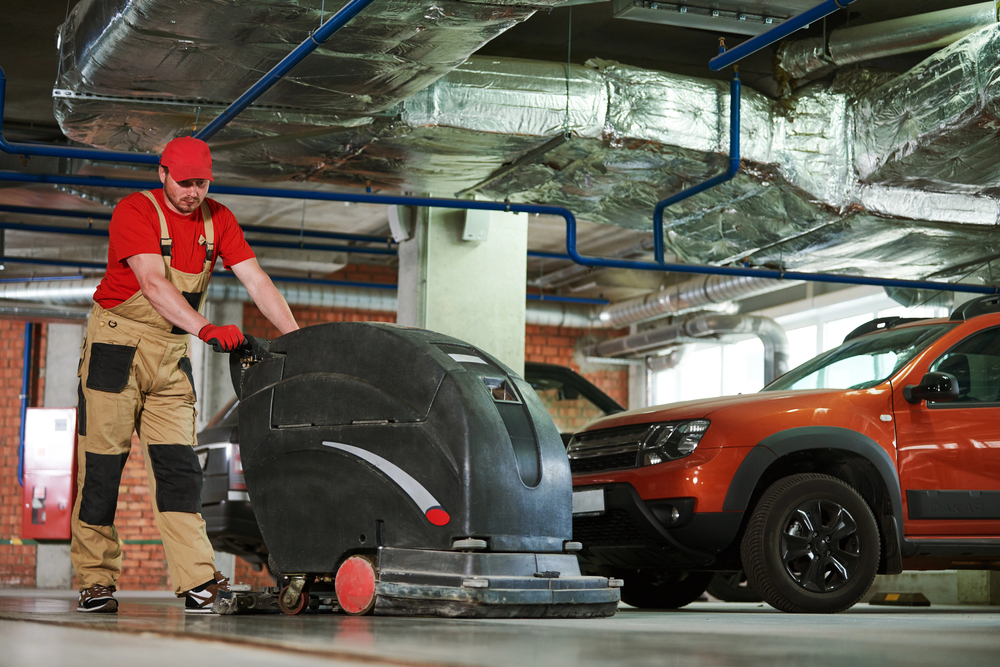
Commercial parking garage cleaning helps property managers remove accumulated dirt, vehicle-fluid stains, tire marks, and debris that can affect appearance and everyday use. The appropriate cleaning method and frequency depend on the surface material, type of buildup, traffic levels, and condition of the garage. Regular inspections and suitable cleaning can support facility maintenance, but structural damage and drainage problems may require separate evaluation.
What Signs Indicate a Parking Garage Needs Cleaning?
Commercial parking garages experience regular vehicle traffic, bringing in dust, dirt, moisture, and residue from roads. Over time, these materials can accumulate on floors, ramps, entrances, and other accessible surfaces.
Property managers should look for the following signs during routine inspections:
- Visible dirt and grime: Widespread buildup can make floors and other surfaces appear neglected.
- Oil and vehicle-fluid stains: Leaks can leave persistent spots that may require targeted cleaning.
- Tire marks and embedded residue: Frequently used drive lanes and turning areas may develop marks that ordinary sweeping cannot fully remove.
- Accumulated debris: Leaves, litter, and dust can collect near corners, entrances, and drainage points.
- Drainage concerns: Debris around drains can obstruct water flow. Persistent standing water may indicate a drainage issue that requires further investigation.
These signs help property managers assess whether routine maintenance is sufficient or additional cleaning is worth considering. Cracks, deteriorating concrete, exposed reinforcement, and recurring water intrusion should also be documented and evaluated by an appropriate building maintenance or structural professional.
Why Is Commercial Parking Garage Cleaning Important?
Maintaining Cleaner Walking and Driving Surfaces
Dirt, loose debris, and vehicle-fluid residue can affect the condition of parking surfaces. Cleaning helps remove certain contaminants that may contribute to slippery conditions, although it cannot guarantee that every surface will be slip-resistant.
Property managers should address spills promptly, use appropriate warning signs during cleaning, and consider surface condition and moisture when assessing potential hazards.
Preserving the Appearance of the Property
A clean garage contributes to the overall appearance of an office building, retail property, apartment complex, or other commercial facility. Removing visible grime and stains can make parking areas more presentable for tenants, employees, customers, and visitors.
Consistent maintenance also makes it easier to identify new stains, unusual buildup, and visible changes in the surface that may warrant further attention.
Supporting Preventive Maintenance
Cleaning can help reveal cracks, deteriorating coatings, damaged joints, and drainage concerns that might otherwise be obscured by dirt. However, washing does not repair these defects or prevent every form of deterioration.
Concrete durability depends on multiple factors, including moisture exposure, drainage, material condition, and maintenance history. Property managers should treat cleaning as one component of a broader facility maintenance plan.
What Types of Buildup Require Different Cleaning Approaches?
Not all parking garage contaminants respond to the same cleaning method. Identifying the material and condition of the surface helps determine an appropriate treatment.
- Loose dust and debris: Sweeping or other suitable debris-removal methods may be sufficient for routine maintenance.
- Oil and vehicle-fluid stains: These may require targeted cleaning products and a method appropriate for the surface and contaminant.
- Tire marks and embedded grime: Persistent residue may require suitable cleaning products, agitation, or controlled water pressure.
- Chewing gum and localized deposits: Spot treatment may be more appropriate than washing the entire floor using the same intensity.
- Biological growth: Where algae or other growth is present, treatment should account for the affected material, moisture conditions, and potential surface damage.
Before pressure washing, the affected surface should be assessed for cracks, deteriorated concrete, damaged coatings, and other vulnerabilities. Excessive pressure or unsuitable cleaning chemicals may damage some materials.
How Often Should a Commercial Parking Garage Be Cleaned?
There is no single cleaning schedule that suits every commercial parking garage. The appropriate frequency depends on how the facility is used and how quickly contaminants accumulate.
Property managers should consider:
- Vehicle traffic: High-use garages may accumulate dirt, tire marks, and vehicle-fluid residue more quickly.
- Environmental exposure: Open-sided structures and entrances may collect more rainwater, windblown debris, and seasonal contaminants than sheltered areas.
- Spill frequency: Areas with recurring leaks or spills may require more frequent spot cleaning.
- Drainage conditions: Areas where debris collects or water remains should receive appropriate inspection and maintenance.
- Facility requirements: Tenant expectations, operational schedules, and documented maintenance plans can influence cleaning intervals.
A practical approach is to conduct routine visual inspections, address spills as they occur, and schedule deeper cleaning according to observed conditions. Keeping maintenance records can help property managers identify recurring problem areas and adjust the schedule when necessary.
Can Power Washing Damage a Parking Garage?
Power washing can remove certain types of dirt and residue, but the wrong technique may damage vulnerable surfaces. Pressure, water temperature, cleaning products, equipment selection, and the condition of the concrete or protective coating all influence the appropriate method.
Before cleaning, the affected area should be checked for cracks, loose material, coating failure, and exposed components. The cleaning method should suit the surface rather than applying the same pressure throughout the facility.
Water management is also important. Property managers should consider drainage capacity, runoff handling, nearby pedestrian areas, and applicable environmental requirements before work begins.
For commercial properties requiring professional surface cleaning, Hot Wash provides information about its power washing in Royse City, TX. The appropriate service and cleaning method depend on the property’s specific requirements.
When Should Property Managers Call a Professional?
Professional cleaning may be worth considering when a garage has widespread grime, persistent oil stains, embedded tire marks, or buildup that routine maintenance cannot adequately address. The appropriate response depends on the extent of the buildup and the condition of the affected surfaces.
Before scheduling work, property managers should identify the affected areas, describe the main contaminants, and disclose any known surface damage or sensitive materials. They should also coordinate vehicle access, pedestrian movement, signage, and cleaning schedules to minimize disruption.
Some conditions require more than cleaning. Cracked or deteriorating concrete, exposed reinforcement, recurring water intrusion, and persistent drainage problems should be evaluated by qualified building maintenance or structural professionals as appropriate.
A professional cleaning assessment can help determine which surfaces need attention and which methods may be suitable. It should not be treated as a substitute for a structural inspection when damage is suspected.
Property managers who need additional information about commercial cleaning options can explore power washing in Royse City through Hot Wash’s existing service page.
Frequently Asked Questions
What does commercial parking garage cleaning typically address?
Cleaning may address accumulated dirt, dust, tire marks, oil stains, litter, and other surface residue. The exact scope depends on the facility, the affected surfaces, and the type of buildup.
How often should a parking garage be professionally cleaned?
Frequency depends on traffic, environmental exposure, spill patterns, and maintenance needs. Regular inspections help property managers determine when deeper cleaning is appropriate.
Can oil stains be removed from concrete parking garage floors?
Some oil stains can be reduced or removed with suitable cleaning methods and products. Results depend on the contaminant, how deeply it has penetrated, and the condition of the concrete.
Does cleaning prevent concrete deterioration?
Cleaning can remove certain contaminants and make surface defects easier to identify. It cannot prevent every cause of concrete deterioration or replace necessary repairs, drainage improvements, or structural assessments.
Is pressure washing appropriate for every parking garage surface?
No. The suitable method depends on the surface material, its condition, the contaminant, and the surrounding environment. Excessive pressure or inappropriate chemicals can damage some surfaces and coatings.
What should property managers check before scheduling garage cleaning?
Review the areas requiring attention, identify visible damage, consider drainage and runoff management, and coordinate access for vehicles and pedestrians. Communicate any known surface vulnerabilities before work begins.
Keep Your Commercial Parking Facility Maintained
Commercial parking garage cleaning is most effective when it forms part of a broader maintenance plan. Hot Wash LLC helps commercial property owners address surface grime and buildup through professional cleaning solutions. Routine inspections, prompt attention to spills, appropriate cleaning methods, and timely evaluation of surface damage can help property managers maintain cleaner and more functional parking areas.
When routine maintenance is not enough to address accumulated surface grime, Royse City power washing is a relevant option to explore for commercial property cleaning needs.
Contact us today!