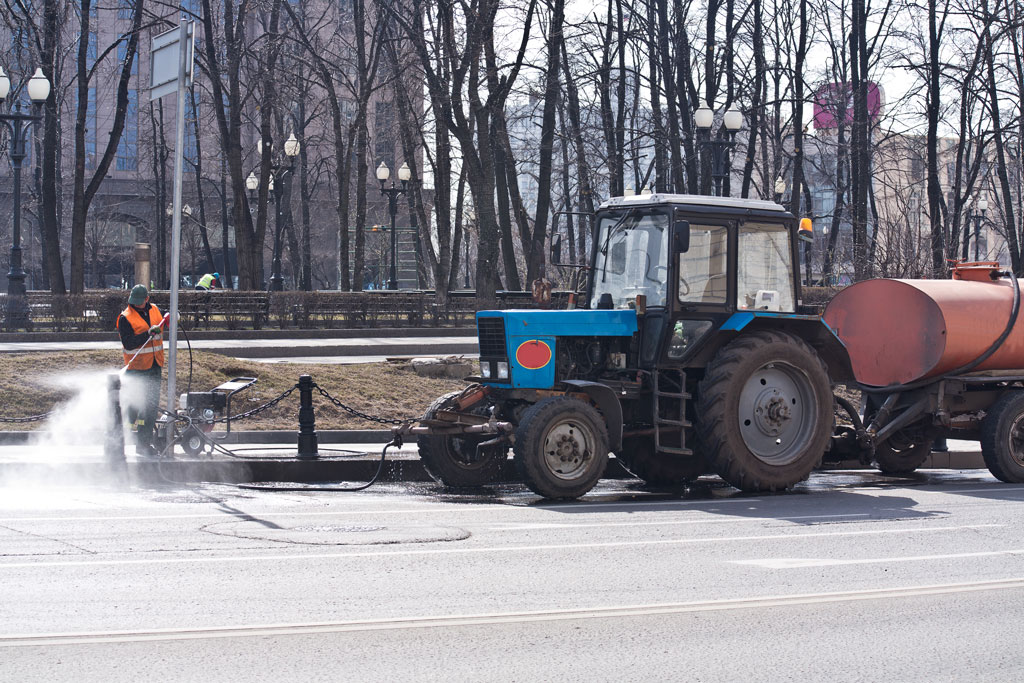
Winter pressure washing can be possible when temperatures, surface conditions, and drainage allow water to be used safely. However, cleaning should be postponed when water may freeze on surfaces, create hazardous walkways, or damage equipment. Before scheduling a winter wash, consider air temperature, surface conditions, forecast lows, and the time needed for water to drain and dry.
When Is It Safe to Pressure Wash in Winter?
Winter pressure washing is most appropriate when conditions allow the cleaning area to remain safe throughout the job and afterward. A forecast showing temperatures above freezing is a useful starting point, but it does not guarantee that every surface will remain ice-free.
Shaded concrete, steps, and other surfaces may remain colder than the surrounding air. Water can also collect in areas that receive little sunlight or drain slowly. If temperatures are expected to fall near or below freezing before affected surfaces dry, postponing the job may be the safer option.
Before cleaning, consider:
- Air and surface conditions: Check current temperatures and the condition of the areas being cleaned.
- The weather forecast: Consider temperatures during the job and overnight, not just the afternoon high.
- Drainage and drying time: Determine where water will flow and whether it could collect in vulnerable or heavily traveled areas.
- Site access: Identify shaded walkways, entrances, ramps, and steps where ice could create a hazard.
There is no single temperature threshold that guarantees every winter pressure-washing job will be safe. Conditions should be evaluated for the specific property, surface, and cleaning method.
Property owners considering Royse City power washing should account for surface materials, drainage patterns, and pedestrian access when planning exterior cleaning during colder weather.
What Are the Risks of Pressure Washing in Winter?
The main concerns are freezing water, unsafe runoff, potential surface damage, and equipment problems. Understanding these risks helps property owners decide when cleaning should proceed and when it should be rescheduled.
Ice on Walkways and Parking Areas
Water left on sidewalks, steps, ramps, and parking areas can freeze when temperatures fall. This creates a slipping hazard for employees, customers, visitors, and pedestrians.
Commercial properties should pay particular attention to entrances, accessible routes, loading areas, and other high-traffic locations. If runoff cannot be managed safely, postpone the cleaning until conditions improve.
Surface Damage
Pressure washing can damage surfaces when the pressure, nozzle, or cleaning method is unsuitable for the material. Existing cracks, deteriorated joints, and areas where water can collect deserve particular attention.
Inspect the surface before cleaning and choose an appropriate method for its condition. Avoid directing water into vulnerable joints or openings. Damage is not inevitable simply because cleaning occurs in winter; the risks depend on the material, its condition, the technique used, and the possibility of freezing.
Equipment Problems
Water left inside a pressure washer, pump, hose, or fitting may freeze and damage components. Follow the manufacturer’s instructions for cold-weather operation, draining, and storage.
Never start equipment if the pump or water lines may be frozen. Follow the manufacturer’s safe thawing procedure before attempting to operate it. Do not assume that heated water eliminates the risk of freezing inside equipment.
Which Surfaces Need Extra Care?
Different exterior materials require different cleaning methods. Assess the surface condition and the potential consequences of water exposure before starting a winter wash.
Concrete and Walkways
Concrete sidewalks, driveways, ramps, and parking areas require careful runoff management. Inspect for cracks, deteriorated joints, and places where water could collect and freeze.
Plan the direction of water flow before cleaning, particularly near entrances and pedestrian routes. Avoid leaving wet areas that could become slippery as temperatures drop.
Siding and Masonry
Siding and masonry vary in durability, condition, and moisture sensitivity. Excessive pressure or an unsuitable nozzle may damage some materials or force water into vulnerable joints.
Choose a cleaning method appropriate for the specific material. Pay attention to existing gaps, deteriorated sealants, and areas where water could enter the building envelope.
Wood and Coated Surfaces
Wood, painted surfaces, and protective coatings can be sensitive to excessive pressure or unsuitable cleaning techniques. Follow the relevant material and product guidance when selecting a cleaning method.
Do not automatically apply sealants or coatings after winter washing. These products may have specific temperature, surface-preparation, and drying requirements that must be met before application.
What Should You Check Before Scheduling a Winter Wash?
A site assessment helps determine whether to proceed or reschedule.
- Review the forecast. Check temperatures during the planned cleaning period and afterward, including overnight lows.
- Inspect shaded areas. Look for existing ice, persistent dampness, and surfaces that may remain cold.
- Evaluate drainage. Identify where runoff will travel and whether it could reach walkways, entrances, or other high-traffic areas.
- Assess the surface. Check for cracks, loose materials, deteriorated joints, and finishes that may require a gentler cleaning method.
- Plan for safe access. Consider employees, customers, pedestrians, and vehicles that may use the property during or after cleaning.
- Protect equipment. Follow the manufacturer’s instructions for cold-weather operation, draining, and storage.
If freezing hazards or unsafe runoff cannot be adequately controlled, reschedule the cleaning for a more suitable weather window.
When evaluating power washing in Royse City, property owners should discuss the site’s specific cleaning requirements, drainage conditions, and scheduling considerations with a qualified contractor.
Does Hot-Water Pressure Washing Make Winter Cleaning Safe?
Hot-water pressure washing can help remove certain types of grease, grime, and buildup, depending on the surface and cleaning requirements. However, heated water does not guarantee that a winter cleaning job will be safe.
Water can cool and freeze after application, particularly on shaded surfaces or when temperatures fall. Runoff can also travel into areas where ice creates a hazard. The decision to clean should account for site conditions, the cleaning method, drainage, and the expected weather.
When Should You Postpone Pressure Washing or Call a Professional?
Postpone cleaning when water is likely to freeze during the job or before affected areas can dry. Existing ice, poor drainage, unsafe access, and forecast conditions that increase freezing risk are all reasons to reconsider the schedule.
A professional assessment may be appropriate for properties with large paved areas, multiple entrances, sensitive exterior materials, or runoff that could affect pedestrian safety. For businesses considering power washing in Royse City, TX, a qualified contractor should evaluate the surface condition, cleaning requirements, water flow, equipment needs, and site access before deciding whether to proceed.
For commercial properties, the plan should also account for employees, customers, delivery routes, and other people who use the area. If risks cannot be adequately controlled, postponing the work is preferable to creating a hazardous surface.
Frequently Asked Questions
Can you pressure wash when temperatures are near freezing?
It depends on the site conditions. Near-freezing temperatures can increase the risk of ice formation, particularly on shaded surfaces and walkways. Consider surface conditions, drainage, drying time, and the forecast before proceeding.
Why does surface temperature matter in winter?
A surface can remain colder than the surrounding air, especially in shaded areas. Water applied to a cold surface may freeze even when the air temperature seems relatively mild.
Can winter pressure washing damage concrete or siding?
Damage is possible if the cleaning method is unsuitable or moisture freezes in vulnerable areas. Surface condition, pressure, nozzle selection, water exposure, and weather all affect the risk.
What happens if pressure-washing runoff freezes?
Frozen runoff can create slippery walkways, steps, entrances, and parking areas. Plan water flow carefully and postpone cleaning when resulting hazards cannot be managed safely.
Does hot-water pressure washing prevent freezing?
No. Heated water may assist with cleaning, but it does not eliminate freezing risks on surfaces, in runoff areas, or inside equipment.
When should I hire a professional for winter pressure washing?
Consider professional help when the property has complex drainage, sensitive materials, large paved areas, or high pedestrian traffic. A site assessment can help determine whether conditions are suitable for cleaning or whether rescheduling is safer.
Planning Commercial Power Washing During Winter
Winter exterior cleaning requires more than choosing a mild afternoon. Weather conditions, surface materials, runoff, and safe access all influence whether a cleaning job should proceed. Hot Wash LLC offers commercial power washing services for building exteriors, concrete, dumpster pads, graffiti, and parking garages.
Contact us today to learn more or discuss your property’s cleaning needs.