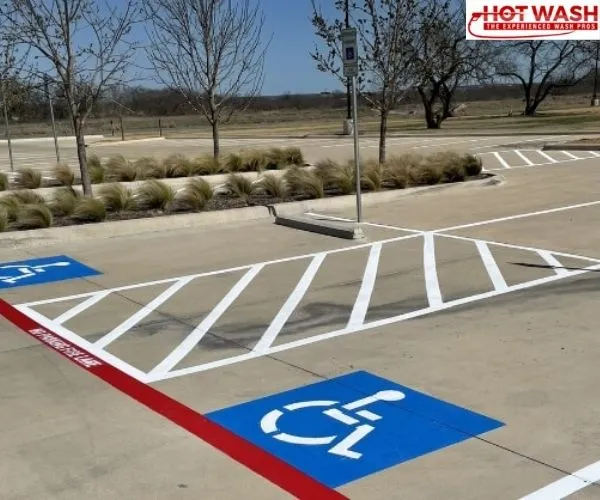
Coordinating commercial pressure washing and parking lot striping requires a strict two-step sequential workflow where deep cleaning occurs prior to paint application. To achieve maximum paint adhesion and longevity, pressure washing must thoroughly remove oil, dirt, grease, and loose debris, followed by a full 24-to-48-hour drying period before line striping begins. Proper coordination prevents premature paint flaking, minimizes operational downtime for tenants, and ensures full compliance with local traffic and accessibility safety codes.
Why Timing and Sequence Matter for Parking Lot Maintenance
A parking lot serves as the immediate front door to any commercial property, shaping initial impressions for visitors, customers, and tenants. However, executing surface cleaning and line striping out of order often leads to wasted budget and degraded curb appeal.
Applying fresh traffic paint over surface grime, engine oil spills, or loose gravel prevents the paint from bonding directly to asphalt or concrete. Within weeks, vehicle friction and weather exposure cause unbonded paint to chip and peel away. Conversely, pressure washing freshly painted stall lines will strip or fade new markings before they fully cure.
To protect your investment and maintain clear markings, parking lot maintenance requires a synchronized schedule: thorough surface washing first, an adequate drying interval second, and precise line striping third.
Step 1: Deep Surface Preparation via Commercial Pressure Washing
Before a single line is painted, the pavement needs a heavy-duty commercial deep clean. Daily vehicular traffic leaves behind tire rubber, transmission fluids, embedded dirt, and organic growth like algae or mildew, all of which block paint from bonding to the pavement.
During a recent site audit for a commercial facility in Dallas, improper surface preparation was identified as the root cause of widespread paint failure across several ADA-accessible stalls. The previous contractor had striped directly over untreated oil deposits, resulting in complete paint detachment within three months.
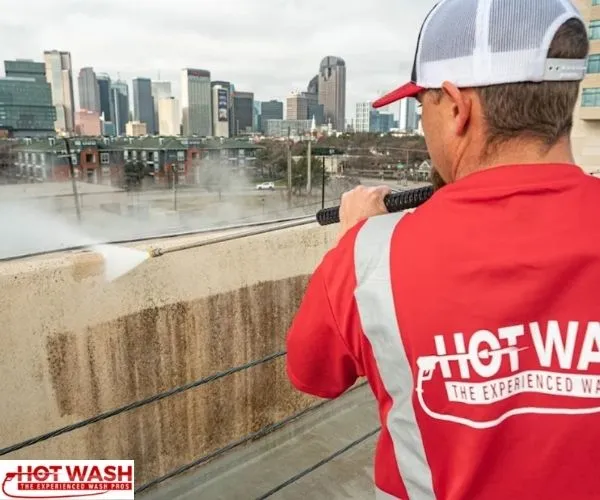
Effective commercial pressure washing requires more than standard water pressure. It demands industrial hot-water equipment capable of melting hardened grease, paired with eco-friendly degreasers that lift petroleum stains out of porous asphalt without damaging the base layer underneath.
Step 2: Curing and Moisture Control
Once pressure washing is complete, the pavement must dry thoroughly before striping crews mobilize. Trapped moisture inside pavement pores is a leading cause of paint blistering and premature peeling.
- Standard Dry Times: Under direct sunlight and moderate humidity, asphalt surfaces require a minimum of 24 hours to dry completely. Shaded areas or cooler conditions may require up to 48 hours.
- Surface Testing: Professional technicians perform moisture checks on low spots and pavement cracks prior to laying down paint lines.
- Weather Tracking: Projects should be scheduled during clear weather windows with zero rain forecast for at least 24 to 36 hours after application.
Step 3: Precision Parking Lot Striping and Compliance
With a clean, dry surface, line striping can proceed. This phase focuses on layout accuracy, crisp edges, regulatory compliance, and smooth traffic flow management.
A complete striping project covers:
- Stall Lines & Directional Arrows: Clear demarcation of parking bays, end caps, and driving lanes.
- ADA Compliance Markings: Accessible stalls, handicap symbols, and mandated access aisles adhering to Americans with Disabilities Act standards.
- Fire Lane Painting: High-visibility red curbs and yellow lettering meeting municipal fire code regulations.
- Specialized Markings: EV charging spots, reserved stalls, loading zones, and pedestrian crosswalks.
By coordinating project schedules with local business managers needing commercial pressure washing & parking lot striping in Royse City, TX, work can be completed during off-peak hours or over weekends to prevent business interruption.
Our Standard of Excellence: Service, Quality, and Precision
Executing a seamless combination of pressure washing and pavement marking requires strict adherence to professional standards.
Our Service Commitment: Our company is committed to delivering exceptional cleaning services that meet and exceed your expectations. Our team consists of highly skilled and experienced professionals who use the latest tools and equipment to deliver outstanding results. We take pride in our attention to detail, our commitment to customer satisfaction, and our dedication to delivering excellence every time.
This standard guides every phase of our work:
- Integrated Project Assessment: Managing surface cleaning and striping through a single team eliminates coordination gaps between separate contractors.
- Professional Equipment: Commercial-grade hot-water power washing units and high-precision airless striping machines deliver straight lines and strong paint adhesion.
- Meticulous Site Management: Work areas are sectioned off with barricades, and pre-paint moisture evaluations are completed before line painting begins.
Whether managing a retail shopping center in Dallas or an industrial facility in Royse City, a unified operational approach guarantees quality results from start to finish.
Master Scheduling: Minimizing Disruption and Downtime
Closing a parking lot for maintenance can disrupt daily operations for tenants and customers. Strategic planning minimizes downtime through phased execution and clear traffic management.
Recommended Phased Approach
- Phase 1: Zone Partitioning
Divide larger parking areas into two or three distinct zones. Keep at least one zone open for employee and customer parking while work progresses in another section. - Phase 2: Off-Peak Execution
Schedule heavy pressure washing during late evening or overnight hours when vehicular traffic is lowest. Follow with line striping early the next morning once the surface has dried. - Phase 3: Clear Signage & Communication
Notify tenants at least 48 hours in advance. Set up temporary directional signage, cones, and barricades to route traffic safely around active work areas.
Property managers overseeing commercial sites that require commercial pressure washing & parking lot striping in Royse City benefit from this phased strategy because it keeps facilities accessible throughout the project.
Key Benefits of Combining Washing and Striping Services
Working with a single contractor who provides both pressure washing and pavement marking offers distinct advantages over hiring separate vendors:
| Advantage | Single Coordinated Contractor | Two Separate Contractors |
| Schedule Alignment | Direct handoff from cleaning to drying to striping | Higher risk of scheduling delays and dry-time miscommunication |
| Accountability | Single vendor responsible for surface prep and paint adhesion | Potential dispute between contractors over paint failure causes |
| Cost Efficiency | Lower mobilization and administrative costs | Double travel and setup fees |
| Downtime Management | Streamlined timeline with faster overall completion | Extended facility closures |
Properties utilizing commercial pressure washing & parking lot striping in Royse City, Texas maintain cleaner facilities, longer-lasting lane markings, and lower long-term maintenance costs through integrated servicing.
Frequently Asked Questions
Can you pressure wash over freshly painted parking lot lines?
No. Freshly painted lines should not be pressure washed. Traffic paint requires up to 24 hours to dry to the touch and 7 to 14 days to fully cure. High-pressure water applied during this window will damage the paint bond and cause flaking or fading.
How long after pressure washing can a parking lot be striped?
A parking lot needs at least 24 hours of dry time after pressure washing before paint application. In shaded areas, high humidity, or cooler temperatures, drying time may extend to 48 hours to ensure no moisture remains in the pavement.
How often should a commercial parking lot be pressure washed and re-striped?
Most commercial parking lots should be pressure washed once or twice a year to remove accumulated oil, dirt, and debris. Re-striping is typically needed every 18 to 24 months depending on traffic volume, weather exposure, and wear.
What happens if you paint parking lines without pressure washing first?
Painting over dirty or oily pavement prevents traffic paint from adhering to the asphalt or concrete. The paint will quickly chip, flake, and wear away under vehicle traffic, requiring premature and costly repainting.
Elevate Your Property’s Safety and Curb Appeal
A clean, clear parking lot protects your pavement, improves pedestrian safety, maintains ADA and fire lane compliance, and presents a professional image to every visitor. Coordinating surface cleaning and pavement marking together eliminates scheduling headaches and keeps your property in top condition year-round.
At Hot Wash LLC, we combine family-owned service with commercial-grade equipment and a 100% satisfaction guarantee. Whether your facility needs deep grease removal, complete re-striping, or a total parking lot refresh, our team delivers reliable, high-quality workmanship with minimal disruption to your daily operations.
Ready to improve your property’s appearance and safety? Contact us today for a free consultation!